Me with my lovely wife, Kathy:

Friday, March 3, 2023

A Rare Defusing of a Common Syndrome: Something We Need More Of

 On the surface, Joshua 22 is a totally odd chapter of Scripture. It is knee-deep in and totally wrapped with the Old Testament Jewish Culture and a system of worship that is totally alien to me. As I have read through the Pentateuch and now am nearly through Joshua, I find myself saying again and again, "Thank you, Lord, that I live in this time after the coming of Christ!" I am confident that there is a rhyme and a reason to the way God chose to be worshipped in this era, and to the elaborate ways He established the special relationship between Himself and the people He had just delivered from bondage in Egypt, but I don't understand many of the fine details, and I am glad that I don't have to deal with all the rules, restrictions, and boundaries.

Yet, in the midst of this totally "Other" system of worship and Theocratic rule, I find a bunch of people who are just like me and my neighbors. It is on that level that I am able to apply the truth of  1 Corinthians 10:11, a verse that is talking about the experiences of the Jewish nation of this era:

Now these things happened to them as an example, and they were written for our instruction, upon whom the ends of the ages have come. (1 Corinthians 10:11, NASB95)  

These folk had the same blood type as me--totally human.

As I say, understanding and applying Joshua 22 is totally dependent on grasping the context, so for those of you who haven't been following the formation and establishment of the Jewish Nation, I offer the following summary: 

(If you are up on your Old Testament Jewish History, feel free to skip to the "Meanwhile Back at the Ranch" heading.)

  • God, for purposes that run through all of Scripture, chose to establish a nation that is set apart from the rest of humanity, yet with a mission to be a blessing to all the people of the world. This nation would be the descendants of  Abraham, Isaac, and Jacob. God changed Jacob's name to Israel, the name that was passed on to the nation that sprang from his descendants.  (This begins in Genesis 12)
  • It represents no failing on God's part, in fact, it is part of the formation process that the infant nation became slaves of the great Egyptian Empire. (The early chapters of Exodus)
  • Under the leadership of Moses, accompanied by an impressive array of miracles--all of which left the Egyptian gods, so-called, lying shattered in the desert sand--God delivered the nation of Israel from its 400-year captivity. (the rest of Exodus and Numbers)
  • On the way out of Egypt to the Promised Land, God gave the people a set of laws, a system of worship, and a calendar that would set the rhythms of Jewish life. Many of these patterns can still be seen in the practices of Rabbinic Judaism today. Miraculously, the Lord cared for His people. (The latter part of Exodus, Leviticus, and the first half of Numbers record the history of this time and process.)
  • Building a nation that will serve God made up of people who, like all of us, are prone to rebel against God, is a messy process. That messiness brings the refugee nation to a crisis in Numbers 13. As a result of their refusal to by faith obey the Lord, the nation was delayed in reaching their new home. The forty-year tour of the wilderness meant that by the time Jacob's descendants were finally ready to enter Canaan/the Promised Land/Israel, it was a new generation that would enter. (These 40 years are covered in the latter half of Numbers) Before the people moved into their new home a review of the Law was necessary. (That's the Book of Deuteronomy)
  • Following a change of leadership from Moses to Joshua (You know, the guy who "fit the Battle of Jericho") the Nation of Israel crossed the Jordan River into their new home. Before they could settle down, however, the current residents needed to be conquered. The "Why?" of that is a bigger, much bigger, matter than this post, not to mention my mind, can contain. (The Book of Joshua, up to chapter 22)
Just one more detail needs to be added to this historical overview. As the Jewish nation was on its way into the region west of the Jordan River that would become their home, a couple of minor kings and kingdoms were defeated. Some of the Israelites, the Tribes of Gad, Rueben, and half the Tribe of Manasseh looked around at the rich pasture land and said, "We'd like to settle down here." After promising to help the rest of the nation conquer the land across the river this plan was approved by Moses. The two-and-a-half tribes were as good as their word. As Joshua 22 opens, these soldiers are going back to civilian life on the farms that were already occupied by their wives and children.

Meanwhile Back at the Ranch:

As soon as they cross the Jordan the Eastside contingent of the Nation of Israel does something that looks to me, and more importantly to the rest of the Jews, to be a total violation of all that they had learned in the last fifty years--do it God's way or suffer the consequences.

When they came to the region of the Jordan which is in the land of Canaan, the sons of Reuben and the sons of Gad and the half-tribe of Manasseh built an altar there by the Jordan, a large altar in appearance. (Joshua 22:10)

When the family on the other side of the river got news of this, they in unison cried out, "Here we go again!" Quoting the great prophet Barney Fife, they vowed to "Nip this thing in bud." No, really they said, "What is this unfaithful act which you have committed against the God of Israel, turning away from following the LORD this day, by building yourselves an altar, to rebel against the LORD this day? (Joshua 22:16). (1995)

They didn't just talk about what their transJordan cousins had done, they mustered an army and were fully prepared to deal with what their relatives had done. And, they were prepared to act before the transgression had nationwide consequences.

In many ways, you have to admire the response of the nine-and-a-half tribes. They had finally learned that God, and God alone, must be worshiped and He must be worshiped as He prescribes. That is a fact that is as applicable today as ever. I was about to say, though, that the Canaan-dwelling Jews went off "half-cocked"--not fully prepared--but maybe they were nine-tenths cocked--"almost, but not quite." Whether the missing element in their action was 50% or 10%, it was crucial.

Two words describe the missing, or faulty, part of their reasoning, "to rebel." Though the Jews living on both sides of the Jordan were Jews, descendants of Abraham, Isaac, and Jacob, miraculously delivered from Egypt and preserved in the wilderness, now there was a river between them. Already, there was reason to other them. They aren't like us. They live on the other side.

Here is where it really gets ugly. We know why they did this. They built this altar "to rebel."

Automobiles have "Idiot Lights" for a reason. It is because so many of us are _____s when it comes to making sure that our cars and trucks have enough oil and coolant in them. In this day in which "othering" has been raised to an international pastime, I propose that we all install "Motive-Alert" warning lights (digital or analog is up to you) on our personal dashboards. Any idiot can look across the river and see that those other people are building an altar. It takes a smart idiot--one with a working Motive-Alert warning system--to realize, "Yeah, but I don't know why."

To their credit, the "Nine-and-a-halfers" didn't immediately go all ben Rambo on them. They sent Phineas, Henry Kissinger, and some other guys over to the other side to talk--and more importantly, listen--first.

Newsflash:  

The diplomatic mission from the nine-and-a-half tribes sent to the other side report: "We are glad that our brothers and sisters on the other side of the Jordan remain true to the core values of what it means to be a part of the nation delivered by God. In an official statement representitives of the two-and-a-half tribes say: ““The Mighty One, God, the LORD, the Mighty One, God, the LORD! He knows, and may Israel itself know. If it was in rebellion, or if in an unfaithful act against the LORD do not save us this day

Further: 

 "[W]e have done this [built this altar] out of concern, for a reason, saying, ‘In time to come your sons may say to our sons, “What have you to do with the LORD, the God of Israel?

 “Therefore we said, ‘Let us build an altar, not for burnt offering or for sacrifice; rather it shall be a witness between us and you and between our generations after us, that we are to perform the service of the LORD before Him with our burnt offerings, and with our sacrifices and with our peace offerings, so that your sons will not say to our sons in time to come, “You have no portion in the LORD.” 

In conclusion: 

 “Far be it from us that we should rebel against the LORD and turn away from following the LORD this day, by building an altar for burnt offering, for grain offering or for sacrifice, besides the altar of the LORD our God which is before His tabernacle.”

I encourage you to read Joshua 22 on your own. Join me in applying the 1 Corinthians 10:11 principle to this passage. "What can I, on a personal level, learn from this passage?" and "As I pray for my leaders, how does the experience recorded in Joshua 22 inform what I ask on their behalf?"

Though it wasn't forever after, Joshua 22 ends with the people living happily together. The river was a reality. The "othering" division that almost took place didn't need to be. 

We need more Phineases.


Friday, February 24, 2023

If I Could Understand Everything About God . . .

 One of the catchphrases (in this case it's actually a sentence) I frequently use is: "If I could understand everything about God, he wouldn't be much of a god would he?" Others address the same idea by talking of attempting to "put God in a box." Obviously, if the earth is God's footstool (Isaiah 66:1)--and that's a metaphor--then there is no box big enough.

Especially, though, for those of us who approach our faith in a cognitive way--"What does the Bible text say, and what does it mean?"--and who have seen the excesses of late Twentieth and early Twenty-first Century so-called Spirit-led ministry, there is a measure of cynicism that has to be overcome. We've seen too many "Spirit-filled" evangelists weeping before the camera, looking at a different camera wide-eyed and disheveled when they are caught in Spirit-forbidden sin. If I'm not careful I allow all the gold-plated bathroom fixtures, Leer Jets, and mansions with guards to convince me that anything beyond what happens with me just isn't right. It must be fake. Somebody has an agenda.

Lord, when my skepticism becomes seeing you as living in a box, forgive me. Heal my heart.

I read this account from Christianity Today magazine of what is going on at Asbury University, 

My first impression was: I was impressed, but, likely, not in the way you expect.

I was impressed by the way the administration at the school reacted to what was going on. I can tell you by experience that making good decisions, as a group, in a new situation, with others looking over your shoulder is hard, really hard. It looks to me like these folk are working hard to maintain balance. On the one hand, there is the unknown. On the other hand, there is a desire to do what is right. 

Lord, guide the administration at Asbury. Protect them and help them protect the students in their care.

The article I mentioned above, and other reports tell of gatherings similar to what is going on at Asbury breaking out at other schools. 

Lord, I admit my ignorance, but I confess that my ignorance of your greatness is vast. It is so vast that I have no idea of what I don't know. Surely, in the vast reaches of who you are, that stretch infinitely beyond what I know, there is much that I don't understand. I do know that you, God, are loving and righteous. So, Lord, from my tiny store of understanding I reach out to you. Lord, I pray that not just college students, but old and young, rich and poor, people of all colors and economic conditions will know your love and will turn from the sin that not only destroys individuals but is consuming our society. I pray that folk will turn to you. 

   Our Father who is in heaven, Hallowed be Your name.Your kingdom come. Your will be done, On earth as it is in heaven. Give us this day our daily bread. And forgive us our debts, as we also have forgiven our debtors. And do not lead us into temptation, but deliver us from evil.  (Matthew 6:9–13, NASB95)  

AMEN 

Friday, January 6, 2023

Epiphany--for me not quite, but . . .

 Some of my friends, who have gone to the trouble of reading some of my Facebook posts over the past couple of weeks, may have wondered about my wandering. "Howard's not a liturgical guy, yet here he is going on about some Anglican guy's thoughts on the days from Christmas Eve to the Feast of Epiphany."

Guilty.

I have been interested in Walter Russel Mead's thoughts recorded in his "Yule Blog." For some years, Mead has taken time annually to write his "Yule Blog" corresponding to the Yule Season, which at least some followers of the Christian liturgical calendar will recognize as the time beginning with Christmas Eve and ending with the Feast of Epiphany, January 6, today.

Until a couple of weeks ago I had no acquaintance with Mead. He is an Anglican. From what I have


read in the 2022-23 edition of his Yule Blog I conclude that he is the kind of Anglican I wish there were more of. He reminds me of C. S. Lewis in one regard, that is, he is not a member of the clergy or a professional Theologian, yet he says profound and relevant things about Theology and what it means to follow Christ. His professional resume makes clear that he is an intellectual. Like Solomon, he has concluded that one's intellect is not fully developed unless it includes training and thought on Theology, which was once considered the "queen of the sciences.

Mead's Lewis-like view of what it means to be well-educated is one reason I was interested enough to read his winter musings. Even though the "Yule Season" ends today, I encourage you to read his Yule Blog.

Here is a sample from the final post on the 22-23 Yule Blog:

[T]he Baby Jesus is the meaning of Christmas, and the meaning of Christmas is the meaning of life. That meaning is the source of our life, the goal of our lives, and the light of all life and of all human beings. It has existed forever and somehow both lives with and is God on high, but It came into our world and into a Jewish family on a special day when Augustus Caesar ruled in Rome and Herod was king in Jerusalem. We had somehow lost touch with the Meaning of it all, but the Meaning hadn’t lost touch with us. It was intent on finding us anyway—and It did. That is what Christians have been celebrating since December 25 and what in many ways we go on celebrating all year.

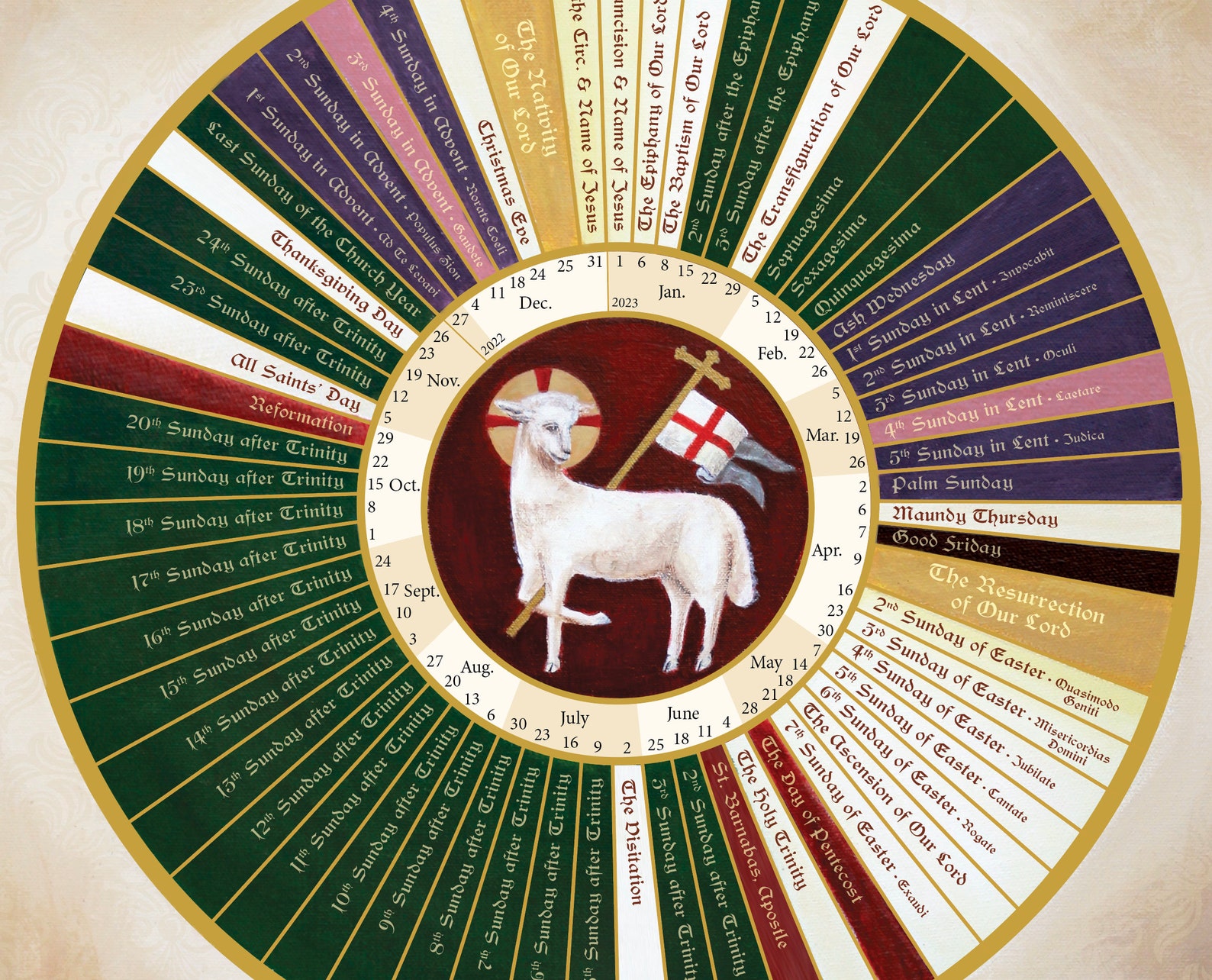
The second reason I have taken the time to read and comment on the Yule Blog is because I need to explore this whole thing of the liturgical calendar some more. 

In most of my pastoral career, with a few exceptions, Christmas, Palm Sunday, Good Friday, Easter (I'd add in the somewhat cultural late additions of  Thanksgiving and Mother's and Father's Day), I have paid no attention to the liturgical calendar. I say "most of" because during my few years living on Guam, I periodically filled the pulpit for the lovely congregation of the Lutheran Church of Guam, which does follow their liturgical calendar. When I would preach there I would choose one of the texts for that Sunday, as my text from which to preach. I was a guest. I thought it best to follow their practice. 

As near as I can tell, the liturgical calendar is the result of collective wisdom and input that stretches over the centuries, that came to a consensus: "These are events and/or truths that are worth celebrating, understanding, and remembering we'll put them on the calendar." Major divisions within the Christan community--the great schism between East and West, the Reformation, etc. have resulted in variations, so not everyone agrees on exactly what should be on the liturgical calendar nor exactly when those events should be remembered. For instance, many remember today as Epiphany, a day associated with the visit of the Wisemen to the Holy Family, and others, celebrate today as Christmas, the birthday of our Savior. So there are a lot of churches that really don't follow a liturgical calendar, then there are churches that do, but they don't all follow the same calendar.

So, other than the fact that this is a matter of division in Christendom is there any lesson here?

Here is one, or maybe two: Though I enjoyed my time with my Lutheran friends, and appreciated Mead's Christmas-related thoughts, I'm not recommending that we Evangelicals adopt one of the Liturgical Calendars as our guide for answering the greatest of Homiletical questions, "What do I preach next Sunday. While I respect the wisdom of the ancients, I don't think that they are necessarily the best authority on what the people in Covington Virginia need to hear next Sunday. I think in general, expository preaching through books of the Bible and/or themes that run through the Bible is the way to go. But, and here is my point. I need to realize that these ancients weren't dummies, at least all of them weren't. I need to listen to them more.

To use the word in its non-Theological sense, that's a pretty dull epiphany, but it's the best I can do right now.

Friday, December 30, 2022

In Which I Channel Scrooge for Some Commentary on New Year's Resolutions:

 I guess I'm a New Year's Scrooge. Since I spent a few years in academe, I suppose I should come up with a seventy-five cent word (inflation) to describe my lack of excitement about changing the calendar on the wall. How about annodisapprobationism?


Here are some reasons for my ADS (AnnoDisapprobation Syndrome):

  • I don't drink & can't dance, so that eliminates a lot of the celebration associated with New Year festivities.
  • On those occasions when I have stayed up to watch the ball drop, my main thought has been about how much money it cost the City of New York to clean up all that confetti, gum wrappers, and who-knows-what. Why doesn't the Big Apple just announce a shutdown of Times Square, and use the money they save to hire some extra police, build a school, or a homeless shelter, or something worthwhile? Hardly Dick Clark like thoughts. (To those of you who object, that New York makes money on tourism, I say, "Bahh This-is-my-blog Humbug.")
  • Having lived for a time where "America's Day Begins," on Guam where it is already fifteen hours in the future, I cynically ask, "Who told New York that they get to be the one who takes the old calendar down? Aren't they the home of the Yankees?" Don't get me started.
  • To all the gushy people on TV who wax eloquent about all the opportunities the New Year will bring, I say, "Bahh Chronological  Humbug." If they really want a new start in the New Year wouldn't they be better off getting a good night's sleep.
  • Who or what is "Auld Lang Syne" anyhow? 

As the noneventful passing of 1999 to 2000 demonstrated, the passage from one year to another is really no different than any other passage from 11:59:59 to 12:00, or 00:00. (To those who want to argue about the precise time a new day, and in this case, the New Year, begins, I say, "Bahh Overly-Persnickety Humbug." The fact remains, there is nothing magical about this new day. In reality, significant days, be their significance good or bad, are spread throughout the calendar. 

Warning! I'm reeling in my curmudgeonly attempt at humor and getting serious now.

When people ask me if I have made my New Year's Resolutions yet, I generally try to brush the question aside. OK, I'm not completely done with being a curmudgeon. The fact is, I sort of don't like the question. My reaction is not unlike what a "Merry Christmas" produced in the heart of the unreformed Scrooge. Let me explain.

I'm not opposed to resolutions. But, I do find it unhelpful to think that resolving is a once a year exercise.

  • I doubt that Abram waited until whatever the last day of the Ur-ite calendar was to resolve to obey and go "out to a place which he was to receive for an inheritance . . . not knowing where he was going" (Heb 11:8). When I become aware that God has spoken it is always time for resolute obedience.
  • I don't think Daniel "Purposed in heart" (I love that KJV-ism) because it was a special day in the calendar, either Jewish or Babylonian, rather it was because the demand of circumstance happened to meet the barrier of conviction on that day. To quote the Apostles who followed in Daniel's civil-disobedient train, "We must obey God rather than men" (Ac 5:29). 
  • It wasn't at a "Watchnight Service" that Paul said, "I press on toward the goal for the prize of the upward call of God in Christ Jesus” (Phil 3:14). If he were at a church's gathering called to "pray in the New Year" (a worthy thing to do, by the way) he might very well have preached that sermon, but the tense of the verb he used indicated that there never was a time in which Paul did not press on with resolve. 
You can supply many more Biblical and Historical examples. The fact is, a deliberate, determined, unsatisfied-with-the-status-quo, disciplined, obedient-to-God, resolute mindset is how we should always live.

If December 31/January 1 serves as a reminder for you then feel free to ignore everything the old curmudgeon who started this post said. Go ahead, RESOLVE!

I'll make a broad suggestion, you fill in the measurable, achievable, appropriate particulars.

LIVE FOR JESUS.

Sunday, December 4, 2022

A Friend Who Was Wrong, But Not Wrong About Everything

 As a preacher I've made and not kept this promise many times; I'll be brief.

Over the past few years, I have appreciated David French's commentaries on culture and American life. Recently, he came down in support of the Respect for Marriage Act. Fellow Evangelical Al Mohler criticised him sharply for this. (You can look up the exchange if you want.) I've kind of mulled this over for several days. While I admire French's desire to respect pluralism in American life, I think he crossed a line on this one. I agree with Mohler. Marriage is a definable thing. It can't be remade into whatever we, or the zeitgeist of our time desires. It's a line we shouldn't cross.

Let me explain that while I have appreciated French's thoughtful approach to big questions, I haven't appreciated him enough to pay for his stuff. My interaction with him has been largely limited to a free article that comes my way once a week, or so. This morning, I saw the freebie in my inbox. "Should I read it?" I thought. "I mean, he was wrong about the marriage thing."

Well, I'm glad I did open his piece. Actually, his piece did, sort of, have something to do with what I'm saying, but that wasn't the point he was making. If you read his piece, you may say he is actually saying the opposite. We can discuss that in the comments. For now, I'd encourage you read what he says, "Remembering What Repentance Looks Like."

Wednesday, November 23, 2022

A Word from One of Israel's Kings that is Relevant for Thanksgiving 2022

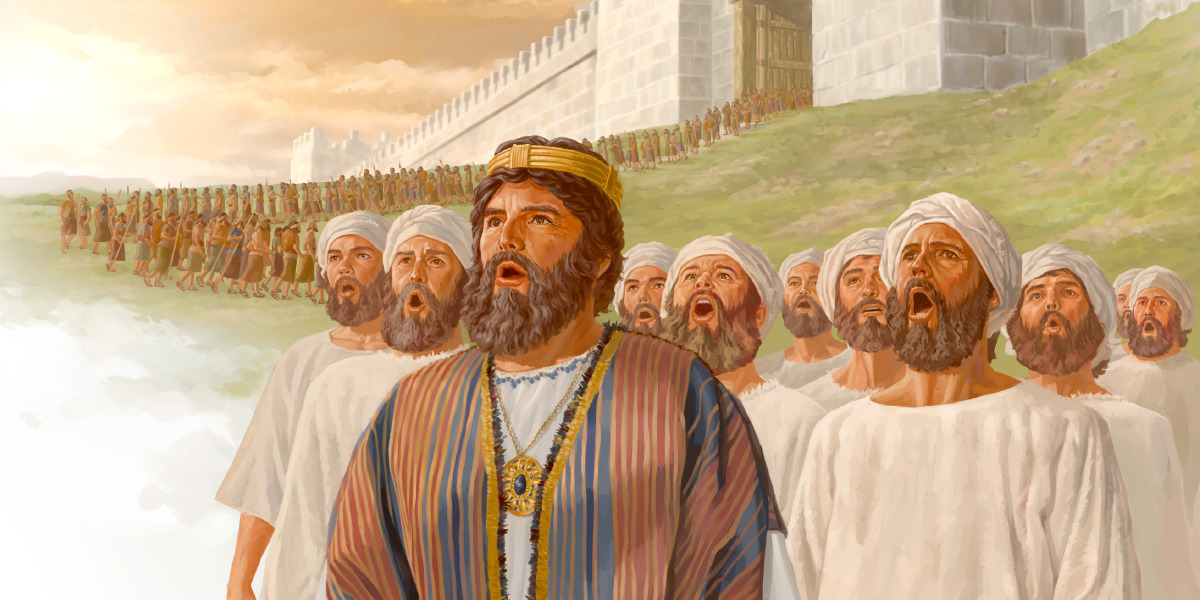
 Lord willing, I'll be preaching on Jehoshaphat's utterly weird battle strategy in 2 Chronicles 20. The plan, which led to the complete rout of an overwhelming enemy, sounds more like the script for a praise
concert than a plan for a battle. 

You can read the Chronicler's account here.

You can hear the story put to music here.


As I was reading through the passage, I was fascinated with the word, "stand."

The Hebrew word is very common in the Old Testament and, not unlike our English word "stand," it takes on a number of nuances.

In 2 Chronicles 20:5 the word describes Jehoshaphat's stance, he "stood in the assembly." As he prayed, he made a declaration on behalf of the people of Judah, perhaps a challenge or appeal more than a statement of settled fact. "We will stand before this house [the temple] and before You [God]." The response was what the king had hoped it would be. Verse 13 finds all of Judah "standing before the Lord." "We do not know what to do, but we will look to you" (v. 12). It was a stance of attitude--a conviction, an act of the will. That comes across even more clearly in verse 17, "hold your position." We might say "stand firm." In verse 21, Jehoshaphat "appointed" singers (this is where the strangeness of the battle plans comes in). The appointment was telling them where they stood in this operation,

   “And when he had taken counsel with the people, he appointed those who were to sing to the Lord and praise him in holy attire, as they went before the army, and say, “Give thanks to the Lord, for his steadfast love endures forever.” And when they began to sing and praise, the Lord set an ambush against the men of Ammon, Moab, and Mount Seir, who had come against Judah, so that they were routed. For the men of Ammon and Moab rose [stood] against the inhabitants of Mount Seir, devoting them to destruction, and when they had made an end of the inhabitants of Seir, they all helped to destroy one another.” (2 Chronicles 20:21–23, ESV)  

In brief, the enemies of Judah took a stand against Jehoshaphat and his people. Their clear intention was to utterly defeat them in battle and take all of their possessions as their own. Instead, they ended up standing against one another. The internal struggle between the enemies of Judah was so complete that by the time the singers had finished their concert, God had given Judah complete victory. 

I can imagine two of the singers surveying battle field. "It had to be that high-note I sang at the end of the first phrase," said a tenor. "No," objected a bass, "it was that booming rhythm I kept up all during the song." in reality:

   “You will not need to fight in this battle. Stand firm, hold your position, and see the salvation of the Lord on your behalf, O Judah and Jerusalem.’ Do not be afraid and do not be dismayed. Tomorrow go out against them, and the Lord will be with you.”” (2 Chronicles 20:17, ESV)  

  • Know what the Lord says. In our day, that means knowing--really knowing--the Bible.
  • Believe it.
  • Do it.
Where do you stand this Thanksgiving?

Friday, November 18, 2022

2 Articles & a Statement on the "Respect for Marriage" Act:

The two articles, one from a respected Evangelical magazine and the other from a widely read online, Evangelical commentator,  agree on the basic facts of what the act does--mainly codifying recent SCOTUS decisions, particularly Obergefell. The CT article puts a positive spin on it, while Dennison takes a darker view.

I think the CT article is only available to subscribers. You may find it elsewhere. It is by Carl Esbeck.


https://www.denisonforum.org/daily-article/does-the-so-called-respect-for-marriage-act-threaten-our-religious-liberty/


In the Theological sense, I am an Evangelical, the LDS church is not. They have, however, been co-belligerents with us in many of the social battles of our time. The first line of their statement indicates that they still profess to be on our side in regard to a proper definition of marriage. 
https://newsroom.churchofjesuschrist.org/article/respect-for-marriage-act-statement
I wonder, though, in our age of freedom to worship (in private), but not necessarily freedom to proclaim truth lest it offend, is the Mormon statement a retreat into a sort of modified Benedict Option (HM's brief definition: withdraw, hole up, and hope, wait, and pray for better days).

Not all slopes are slippery, but, clearly, some are. 
Christian leaders need to be wise. All of us need to pray for clear courageous thinking.